Mostrando entradas con la etiqueta copyright. Mostrar todas las entradas

La Directiva del Copyright en punto muerto en Bruselas y, el sector Internet de nuevo en pié


En relación con los artículos clave del texto que ha preparado la Comisión en 2016, sigue sin haber acuerdo al menos en dos cosas importantes en la economía y sociedad digital. 

Una, la responsabilidad de los proveedores y plataformas por los contenidos que suben los usuarios (porque se exigiría a sitios como YouTube o Vimeo que monitoricen el proceso y filtren), y dos, los derechos remuneratorios de los editores de periódicos, que trataré otro día. 

La Presidencia que ha  tomado el relevo a Eslovenia este primer mes de 2018, viendo que los intereses están muy encontrados,  pide que se llegue a un acuerdo previo a su envio al Parlamento y concretamente pide que se clarifique qué es “comunicación al público a los efectos de esta directiva” y si están comprendidos en ese tipo de actos los servicios que ofrece YouTube, Vimeo u otras plataformas en las que usuarios (sean estos ciudadanos o empresas) distribuyen contenido o bien gratuitamente o en alquiler o venta”.  
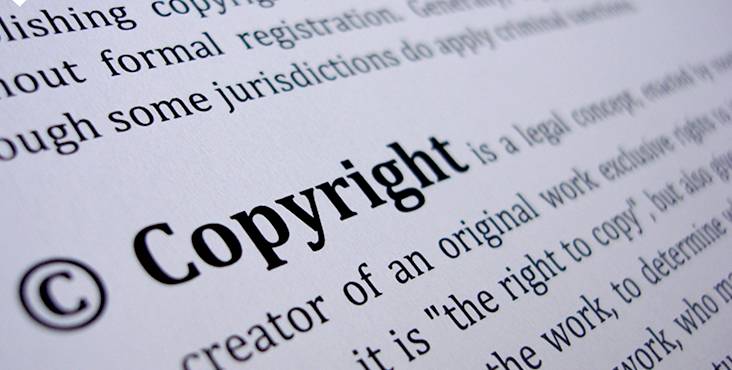


Comparto bastantes de las peticiones de la Asociación de Empresas de Electrónica, Tecnologías de la Información, Telecomunicaciones y Contenidos Digitales AMETIC, usuarios y audiencias reunidos en iCmedia, y las startups y emprendedores tecnológicos agrupados en la Asociación Española de Startups, que "han manifestado su profunda preocupación por la posición oficial de España en el proceso de discusión y negociación de la Directiva europea de Copyright al entender que la actual redacción de su artículo 13 supone una amenaza para el ecosistema de Internet, el desarrollo de la economía digital y la creación de riqueza y empleo en España, especialmente al reinterpretar el concepto de “comunicación pública” afirmando que todo proveedor, plataforma o sitio online lo realiza ante contenido subido por sus usuarios.  

Ofrezco alguna cita más del articulado para su comprensión.

Sobre el art. 13 sigue habiendo posturas encontradas y ofrecen 3 borradores de texto y cito lo que dice la nota del Consejo


Three draft compromise proposals by the Presidency with different options on Article 13 have been discussed in the Working Party. In the first option3 the Presidency proposed to clarify under which conditions information society services providers storing and giving access to user uploaded content are communicating to the public, using the criteria suggested by some delegations. A number of delegations showed support to the idea of the clarification itself but some of them raised concerns about the criteria used, which they found to be too similar to those used under Article 14 of the E-Commerce Directive and expressed their preference for copyright relevant criteria based on the case law of the CJEU.

La postura por la que se inclina la EU es a considerar que los proveedores y “emisores” si deben responder. Lo que dicen es que en su caso NO SE APLICA la exención de responsabilidad que fija el Directiva de eCommerce del 2000, aunque al final veremos que van a delegar al desarrollo de cada Estado al aplicar la Directiva. Destaco algunos de sus razonamientos:

Based on these comments, the Presidency tabled a second compromise proposal4. In this proposal the Presidency used criteria from the CJEU as requested by the delegations. However, even though the direction taken was considered to be the right one, further comments were made by the delegations with regard to some of the criteria used. Additionally, some delegations asked for a clarification on the link between the communication to the public and the E-Commerce Directive by providing that Article 14 of the E-Commerce Directive does not apply to the service providers regulated by Article 13. At the same time, concerns were raised on whether this approach would lead to excessive liability of such providers, as they would be considered primarily liable for copyright infringements in cases where their users upload content in which they do not hold any rights and without having been authorised by rightholders to do so. Questions were also raised with regard to the link between the clarification on communication to the public and the measures to be taken, where it was felt that more clarity was needed on which service providers should take the measures.

..
Under this proposal, service providers that communicate to the public and are not eligible for the limited liability regime under Article 14 of the E-Commerce Directive would not be liable for unauthorised acts of communication to the public of content uploaded by their users under the condition that they take effective measures with regard to the content identified by rightholders and, if ex ante identification of the content is impossible, remove such uploaded content upon a notification by rightholders and avoid future uploads of this specific content.

Si pueden exonerarse de responsabilidad si los titulares de derechos no les facilitan los datos necesarios para adoptar medidas  (datos con que filtrar, capar o limitar difusión de música, cine, etc). Como hasta ahora YouTube bloquea música, cine, tv cuando sus DRMS o sistema de Digital Rights Management System identifica la obra. Lo que indica la Directiva es que no podrán “quejarse” los titulares de derechos (normalmente en Europa a través de las Entidades de Gestión y en USA más vía Sindicatos o Consorcios de empresas) que no faciliten a las plataformas los datos correspondientes. 

Furthermore, these service providers would not be liable for the specific unauthorised content uploaded by their users if no relevant data is provided by rightholders to allow the service providers to apply the measures. A significant number of delegations expressed their concerns that this approach would add a new liability exemption, thus not achieving the objective of strengthening the rightholders' position. A few delegations found this approach to be a balanced one and other delegations did not express their views.


Y finalmente, aunque todo puede seguirse aquí en el portal legislativo de la UE, copio la
ÚLTIMA POSICIÓN DEL CONSEJO. ENERO 2018 

Proposal for a Directive of the European Parliament and of the Council on copyright in the Digital Single Market - Orientation debate on Articles 11 and 13

ST 5284 2018 INIT - 2016/0280 (COD)

Value gap provisions

Taking into account the different approaches by the delegations and the difficulties to reach an agreement on some fundamental elements of Article 13 and of the related recitals, the Presidency considers that political guidance should be sought on the most important questions in order to be able to progress with the discussions on Article 13. With this purpose, the Presidency would like to seek political guidance on the following questions :

(1) Should there be a clarification in Article13 that service providers that store and give access to user uploaded content perform, under certain conditions, an act of communication to the public or should Article 13 be limited to self-standing measures, applying to user uploaded content platforms with a significant amount of uploaded content, without any clarification on communication to the public, as in the Commission proposal?

(2) Should there also be an explicit provision in Article 13 clarifying that such services are not eligible for the limited liability regime under Article 14 of the E-Commerce Directive meaning that they would be taken out of Article 14 of E-Commerce Directive and be primarily liable for copyright infringements when their users upload content not authorised by rightholders?

(3) If the user-uploaded content platforms should be liable, should they be liable in all cases or should there still be some targeted liability mitigation provided for to avoid potentially excessive impact on platforms storing and giving access to user uploaded content?

(4) If there is a clarification of the communication to the public, should there also be an obligation to apply measures as an additional provision, and if so, should it apply to the same service providers as those concerned by the clarification on communication to the public or should the scope of this obligation be different, potentially wider?

In addition to the above, within the context of questions concerning communication to the public and applicability of the limited liability regime as provided for under the E-commerce Directive, the Presidency would like to invite delegations to consider the following:

- Would a possible solution be a text without any language regarding those issues in Article 13, but a recital that would recall the existing principles of EU law which are relevant to determine the conditions under which user uploaded content platforms engage, based on the existing case-law of the ECJ, into a copyright relevant act and are not covered by the limited liability in Article 14 of the E-commerce Directive?

Evolution of legal and political IP regimes (post @LSE Media Policy Project)

Autora: Loreto Corredoira 
Este blog de la prestigiosa London School of Economics publica un resumen de mi ponencia en la IAMCR de junio pasado (Dublin), en cuya edición final han colaborado Sally Broughton (@broughtonmicova) y Paul Mora, ambos investigadores del @lsemediapolicy. Les dejo con la presentación y el link.


Loreto Corredoira, Professor of Communication Law at Complutense University of Madrid, shares some initial observations from a wider research project[1] looking at the evolution of legal and political IP regimes at both international and national levels. She argues that there is potential for European countries to adopt new approaches to protect content industries, focusing more on user rights, fair use and personal freedoms.

The multinational ACTA treaty and the SOPA and PIPA legislation proposed in the US faced substantial public protest. Critics called them over-regulation that stifles markets and opportunities, and could end up asphyxiating not only the media industry but also user freedoms and constitutional rights. In response to this protest, several national governments now appear poised to adopt new approaches to copyright regulation.
In the UK, the Hargreaves Review and Richard Hooper’s subsequent copyright study  signal a true shift in the European legal framework. Similarly, in Spain, the Minister of Culture is preparing a new Law of Intellectual Property to be debated in Parliament during 2013 to reinforce the recent Ley Sinde. French President Hollande launched a review of the aggressive Hadopi Law, which is now in the process of being revoked. The French law had been the strictest in Europe because it allowed Internet access to be denied to anyone who, after three warnings, downloaded “illegal content”.

Reino Unido se suma a los nuevos aires en regulación del Copyright

Autora: Loreto Corredoira 
Acabo de enviar a la Conferencia IAMCR la propuesta de "New Air in the Copyright Regulation?  European countries facing other approach to protect content industries" -que tienen más abajo- tras analizar lo que se ve como tendencia ya en los textos legales, especialmente en el Reino Unido, con la propuesta de Modificación de la ley de Copyright para abrir el mercado, en vez de cerrarlo.
Hace dos días leía a Miguel Jorge  también en el blog ALT40 que Finlandia está preparando esa reforma en la buena dirección.
Recently, the UK Government proposed a new approach on Copyright regulation.  The Hargreaves Review and Richard Hooper’s subsequent programme of study represents a true “shift” in the European legal framework. In contrast, in Spain a new Law of Intellectual Property is being prepared by  the Minister of Culture to be discussed in Parliament the next months.
At the same time, as soon as the new President of France, Mr. Hollande, arrived in the Elysée Palace, he promised a review of the HadopiLoi.This is the strictest law in Europe because it provides for –after “three warnings”- the cutting off of any Internet access to any user who downloads “illegal content”.
In this regard, we realise a switch in regulation, not only because of the protests against ACTA, SOPA or PIPA Laws all over the world, but also because European Governments and industry associations are contemplating a tremendous threat: over regulation of content  is stifling markets and opportunities to sell or rent music, videos o TV programmes, and could end up by asphyxiating them’.
We will analyze the aforementioned UK proposal "Modernizing Copyright”, which is currently before the British Parliament, and its likely influence on the international agenda to reform content regulation which we’re studying in a wide Research project[1]. In the Consultation on Copyright: Comments on Economic Impacts[2] scholars suggest, as we have also done, that another approach to copyright law is desirable..  The consultation highlighted the strongly opposing views of rights holders and others about the likely benefits of the Government’s proposals. 
 This paper is part of a research project in which we aim to perform a more extensive comparative analysis of the various legal and political texts currently under discussion at the international level (SOPA or PIPA in the US, ACTA in the European Parliament), as well as at the national level, such as the two Anti-piracy laws in Belgium, the Sinde Law in Spain, the Hadopi Laws in France or the Digital Economy Act in the UK.
There is a very interesting approach to this issue which can be drawn this way:

What strategy  is better?
Follow the money
Follow the user
Follow the site
New UK strategy
Hadopi Law (France)
Sinde Law (Spain)
Criminal Law

ACTA-SOPA-


[1] I did a previous presentation also at ECREA Pre-conference “Imposing freedoms”. The project "Las libertades informativas en el contexto de la web 2.0 y las redes sociales: redefinición, garantías y límites" ("Freedom of information in the context of Web 2.0 and social networks: redefinition, guarantees and limits") is financed by the program "Proyecto I+D" of the Ministry of Economy and Competitiveness of Spain (reference DER2009-14519-C05-01).

Propuesta de mayor transparencia a la Unión Int. de Telecomunicaciones (Dubai 2012)

Autora: Loreto Corredoira 

El Internet Governance forum en el que participo ha remitido estas sugerencias a la Unión Internacional de Telecomunicaciones. La UIT, organismo de Naciones Unidas, se reúne en diciembre en Dubai para su conferencia mundial y aprobar la futura regulación mundial de las "Telecomunicaciones" (el borrador en inglés está aqui) en la que con claridad se amplian las competencias de la UIT. 

Como tuve ocasión de destacar en el Congreso de  la Red Derecho Tics, en un artículo largo que se publicará en 2013, la agenda internacional de reformas en materia de TICS tiene mucho que ver con el control de la "gobernanza" de Internet en especial en tema copyright. 
Avanzo aqui algunos párrafos: 

Como hemos mencionado al inicio, la UIT plantea varias cuestiones de interés en lo
relativo a control de contenidos para su próxima reunión mundial en Dubai,
coincidiendo en los días de este Congreso introduce en su agenda el documento
El documento de la UIT es especialmente interesante porque marca una tendencia en el
campo de la regulación de las TIC. La UIT es un organismo de ONU, con capacidad de
implementación de políticas sobre radiodifusión, espectro radioeléctrico, que hasta
ahora no se había preocupado por los contenidos, tampoco por la “banda ancha”, claro
que ahora el acceso a Internet por 3G y 4G se distribuye por satélite y, entonces, sí entra
en su ámbito.
Durante los últimos años los organismos reguladores de Telecomunicaciones han visto
aumentadas sus competencias en el campo de las TIC y de la radiodifusión y, más
recientemente ha entrado en su ámbito competencial cuestiones como la
“ciberseguridad”, la protección de datos, la piratería y por supuesto las aplicaciones y
servicios online que median en el comercio electrónico -los social media, los servicios
en la nube, la banca móvil, etc. 
.


Esta que sigue es la que envió el IGF.

Statement of civil society members and groups participating in the "Best Bits" pre-IGF meeting at Baku in 2012
We thank the Secretariat of the ITU for making the opportunity to submit our views.

Nevertheless, the process of the revision of the International Telecommunication Regulations (ITRs) has not been sufficiently inclusive and transparent, despite some recent efforts to facilitate public participation.  Fundamental to the framing of public policy must be the pursuit of the public interest and fundamental human rights, and we urge Member States to uphold and protect these values.

We as civil society organizations wish to engage with the World Conference on International Telecommunication (WCIT) process in this spirit. Member States, in most cases, have not held open, broad-based, public consultations in the lead up to the WCIT, nor have they indicated such a process for the WCIT itself.
In order to address this deficiency, and at a minimum, we would urge:
* All Member States and regional groups to make their proposals available to the public in sufficient time to allow for meaningful public participation;
* All delegates to support proposals to open sessions of the WCIT meeting to the public;
* The ITU Secretariat to increase transparency of the WCIT including live webcast with the video, audio, and text transcripts, as far as possible, to enable participation by all, including persons with disabilities;
* The ITU Secretariat, Member States, and regional groups to make as much documentation publicly available as possible on the ITU's website, so that civil society can provide substantive input on proposals as they are made available;
* Member States to encourage and facilitate civil society participation in their national delegations;
* The ITU to create spaces during the WCIT for civil society to express their views, as was done during the WSIS process.
Given the uncertainty about the nature of final proposals that will be presented, we urge delegates that the following criteria be applied to any proposed revisions of the ITRs.
* That any proposed revisions are confined to the traditional scope of the ITRs, where international regulation is required around technical issues is limited to telecommunications networks and interoperability standards.
* There should be no revisions to the ITRs that involve regulation of the Internet Protocol and the layers above.
* There should be no revisions that could have a negative impact on affordable access to the Internet or the public's rights to privacy and freedom of expression.
More generally we call upon the ITU to promote principles of net neutrality, open standards, affordable access and universal service, and effective competition.

Signatories:
Bangladesh NGOs Network for Radio and Communication (AHM Bazlur Rahman / Bangladesh)
Centre for Internet and Society (Pranesh Prakash / India)
Center for Democracy & Technology (Kevin Bankston & Emma Llanso / United States of America)
Collaboration on International ICT Policy for East and Southern Africa (CIPESA [Eastern and Southern Africa])
Consumer Council of Fiji (Premila Kumar / Fiji)
Consumers International (Jeremy Malcolm / Global)
Electronic Frontier Finland (Tapani Tarvainen / Finland)
Imagining the Internet Center (Janna Anderson / United States of America)
Instituto Nupef (Carlos A. Afonso / Brazil)
Internet Democracy Project (Anja Kovacs / India)
Internet Research Project (Fouad Bajwa / Pakistan)
Global Partners & Associates (Andrew Puddephatt / United Kingdom)
ICT Watch Indonesia (Donny B.U. / Indonesia)
Instituto Brasileiro de Defesa do Consumidor / Brazilian Institute for Consumer Defense (Veridiana Alimonti, Brazil)
InternetNZ (Susan Chalmers / New Zealand)
IT for Change (Parminder Jeet Singh / India)
Media Education Center (Narine Khachatryan / Armenia)
ONG Derechos Digitales (Claudio Ruiz / Chile)
OpenMedia (Steve Anderson / Canada)
Gobernanza de Internet.co (Antonio Medina Gomez / Colombia)
Ginger Paque
Endorsements:
Cyberlaw Clinic, UCM, Spain

Articulo de Loreto Corredoira reflexiona sobre el #MeToo, Sexual Harassement, la reputación y el derecho a la imagen de las celebrities

The Right of One's Own Image in the Recent Cases of Sexual Harassment in Film Industry: Applying the European Theory of Concentric Circ...